
Cystoscopy, Stent Removal, and Another Scare
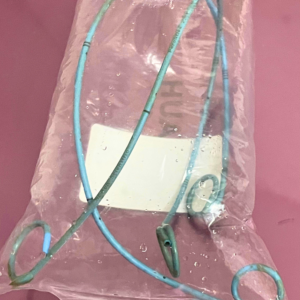
The earlier CT scan had shown wall thickening in my bladder, so a cystoscopy was recommended. I also needed to return to my urologist for the removal of the double-J stent. Before I was discharged after the main surgery, I had signed a waiver acknowledging that the stent would need to be taken out within a window of up to six months. Sometimes it is done earlier, around three months, but six months was the outer limit.
The Urologist will combine the two procedures. Before the cystoscopy, she ordered a urine cytology. The result showed atypical cells, which raised the possibility of cancer in the bladder as well. That made the cystoscopy even more necessary. During the procedure, she would look inside. If anything looked suspicious, she would take a tissue sample for biopsy. If everything appeared normal, no biopsy would be needed.
The quotation she gave us was around ₱40,000 to ₱60,000, described as all-in covering the hospital charges, her professional fee, and the Anesthesiologist. It was an outpatient procedure, but because it involved cystoscopy, general anesthesia was required. It would not be the simpler numbing approach used in some other cases.
When the day came, we ran into a problem with payment. The Anesthesiologist did not accept guarantee letters at all. My Urologist was willing to charge only ₱5,000 to a guarantee letter. Her own professional fee was ₱40,000, and on top of that there were the Anesthesiologist’s fee and the operating room supplies. We needed more than ₱40,000 in cash, but we did not have that amount on hand. We had been counting on the guarantee letters, yet most of the charges had to be paid in cash. I finished the proceduremaybe an hour or two in the morning, but I could not be discharged. We stayed until past nine or ten o’clock, and it was close to lunch time before everything was settled. My mom had to borrow money so we could complete the payment and I could finally go home.
Later that night, I started vomiting. It went on for hours. It was possibly a side effect of the anesthesia, or from the antibiotics that had been prescribed. It lasted about a day, then eased. A few days later, however, the vomiting returned, this time much worse. I threw up everything I ate, even water. For two or three days I could not keep any food or liquid down. I became so weak that we had to rush to the emergency room.
Because I am a cancer patient, they said I needed to be observed, so admission was required. Since we were using a guarantee letter, we had to wait for a room that accepted it. I stayed in the ER for three or four days. Eventually we signed a waiver for home care. By then I was already improving, I could eat again and drink water. The finding was a gastric or peptic ulcer. It was not directly listed as a chemotherapy side effect, but chemotherapy can thin the stomach lining, so that was the most likely connection.
While we were there, we also received the bladder biopsy results. Sample A was benign. Sample B showed atypical cells, so further testing with CK20 and P53 was ordered to be sure. When those results came back, they confirmed that it was benign. I was relieved. At least the cause had only been for the stents and it was not another cancer. After everything we had already been through, hearing that it was nothing serious felt like a weight lifted. I thanked God for that.