
Admission Day and the Longest Night
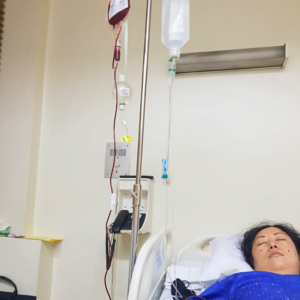
We arrived for my admission around 6 in the evening. The waiting began immediately. There was no vacant room we could use yet.
We were relying on guarantee letters—documents we had gathered from our local government unit, our congressman, several senators, a party-list office, and the Office of the President. Instead of paying cash upfront, these letters covered a specific amount. My doctor’s estimate for the surgery was ₱300,000. That figure was only an estimate. It could still go higher, and it did not yet include professional fees, which would depend on what actually happened during the operation.
The amounts on the letters varied. One senator gave ₱3,000. Another gave ₱5,000. The Senate itself covered ₱10,000. A party-list office also gave ₱10,000. There were more from the congressman and the Office of the President. Every peso helped, but the rule was clear: with guarantee letters, we could only stay in a semi-private room or lower (semi-ward or ward). Semi-private rooms cost around ₱2,000. Anything higher, like a full private room at ₱2,500 or above, required cash. There were available rooms that night, but they were all above the limit. So we waited.
By 9 o’clock, there was still nothing. Some patients had already been discharged, but the rooms still needed to be checked by engineering and cleaned by housekeeping. It was taking too long. My back was already in severe pain. I could not lie down comfortably. My mom, who was my watcher, was also suffering from her own back pain, and she had no lumbar support. Sitting and waiting for hours was becoming too hard for both of us. We decided to go home and return the next day. The staff said they would reserve a room for us once one became available, and they would call so we could confirm the time.
Going home was a small relief. The next day, we came back and finally got a room. It was right beside the nurse station, close enough that help was only a few steps away. There was a view of trees outside, but I knew I would not be able to enjoy it. Only my mom would.
That night, they placed a Heplock and started my IV. I was put on full fasting. No food, no water only the IV fluids because of the anesthesia. The plan was for the urologist to place the double-J stent first. They would pick me up at 5:30 in the morning and bring me to the holding area. My surgery was scheduled for 8 AM.
Before we slept, my mom and I prayed. My prayer was very specific because I was terrified. I had heard stories of people who remained conscious during surgery and could hear the doctors talking, or who felt the sensation of being cut even under anesthesia. The rocking, the pressure, the movement. I did not want any of that. I asked to be completely asleep. I wanted to wake up only after everything was finished, with no memory of what happened in between.
I also feared the pain that comes when anesthesia wears off. My mom’s friend once had a myoma operation and felt almost no pain afterward. She even walked down to the social service office right after. I asked for that too. And I asked for the surgery to go well. No sudden drop in blood pressure, no heart complications, nothing that would keep me from coming out alive. I needed to leave that operating room still breathing.
At 5:30 the next morning, they took me to the holding area. A man was lying on the bed to my right, groaning. His heart monitor kept beeping. Nurses rushed over and the atmosphere turned tense. I had never had surgery before. I did not know if he had just come out of an operation, or if this was what recovery looked like. The room was cold and I was shivering. Then a nurse came to assist me. She was cheerful, almost playful, and for a moment the fear eased.
Around 6 AM they brought me into the operating room. They began preparing the medications and antibiotics in my IV. The anesthesiologist explained what would happen. He said he would put me to sleep so I would not remember anything. He also mentioned an epidural. I had imagined a large needle going into my spine while I was still awake, and the thought scared me. He reassured me: they would put me to sleep first. The doctors would operate. Only after the surgery was done would he place the epidural. I would not feel any of it.
I fell asleep around 7 in the morning. When I opened my eyes, it was already 7 in the evening. Twelve hours had passed. My mom had been going back and forth to the recovery room, asking about me. They told her I was still sleeping. When I woke, they asked if I could move my legs. I could not. Everything still felt numb. I drifted off again. Slowly, little by little, the feeling returned.
They still would not move me to my room. The resident doctor said my blood pressure was low and my blood count was low. They ran more tests. It was already midnight when they finally transfused blood into me. Once my blood pressure stabilized and the transfusion finished, they brought me upstairs. My mom was waiting.
She told me later what happened while I was under. The doctors had shown her what they removed. She had been trying to stay strong and keep praying, but when they finally went up to the room, she cried. They had taken out my uterus and ovaries. They also found hardening deposits in the gallbladder and on the appendix, so a surgeon was called in to remove the appendix as well. Thirteen lymph nodes were taken out too.
When I woke in recovery, I already had a Heplock on my right hand in addition to the one on my left. Three lines were attached to the right side: the epidural, the dextrose and medications, and the blood transfusion. My right hand was swollen from everything running through it. The left Heplock stayed in place for five or six days. They never removed it early.
ut the pain I had been so afraid of never came. I had slept through the entire operation. I felt nothing while they worked, and I felt no sharp pain afterward. The wound itself was a clean, straight line. There were no visible black stitches that looked like sewing thread. It was simply closed. My prayer had been answered.
I also felt lighter. The large cyst that had made me look seven months pregnant was gone. I had lost weight. At first I was only allowed a liquid diet, then soft food. They kept asking whether I had already passed stool. Because I still had a catheter, going to the bathroom was not simple. I did not want to use the diaper for that. I hoped I could wait until the catheter was out and I could go to the actual comfort room, preferably close to the day I would be discharged.
My mom stayed with me the whole time. She was already weak and in pain herself, yet she kept changing my diapers and watching over me without complaint. Being in a semi-private room—alone, because of the guarantee letters was another quiet mercy. At least when the diaper had to be changed, there were no other patients in the room. Nothing was exposed. In the middle of everything that was hard, I could still see small mercies: the room, my mother’s presence, and the fact that I had come out of surgery alive.